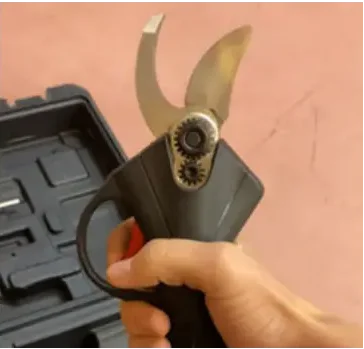
What is the most effective Strategy to Kill Tree Suckers? Kill tree suckers by pruning them with sterilized shears. It takes less than 5 minutes to remove one sucker. The required supplies are rubbing alcohol, a medium bowl, a clear towel and ergonomic pruning device shears. 1. Sterilize the pruning shearsDip the blades of your pruning shears in a bowl of rubbing alcohol. Dry them thoroughly with a clean towel. Keep the towel and bowl of alcohol nearby. 2. Remove the sucker at its baseAmputate the sucker at its base. This reduces its potential to reappear in the identical location. Do not cut into the supporting branch or root. It is healthier to depart a tiny portion of the sucker stem intact than to wreck its assist structure. 3. Re-sterilize your pruning tool after each removalSterilize your shears after you clip each sucker, even when they are growing from the same tree. This minimizes the possibility of spreading pathogens. Sterilization is especially necessary when eradicating suckers from multiple timber. 4. Clean your equipment after pruningSterilize your gear after you end pruning. Immerse the blades within the bowl of rubbing alcohol, and keep them submerged for 30 seconds. Dry them completely with a delicate towel. 5. Monitor the pruning websites for regrowthMonitor the pruned areas and remove regrowth instantly. Suckers, especially people who grow immediately from tree roots, often reappear a number of occasions. Prompt, repeated pruning ultimately kills them.
Viscosity is a measure of a fluid’s rate-dependent resistance to a change in shape or to motion of its neighboring parts relative to one another. For liquids, it corresponds to the informal concept of thickness; for instance, ergonomic pruning device syrup has a higher viscosity than water. Viscosity is defined scientifically as a power multiplied by a time divided by an space. Thus its SI models are newton-seconds per metre squared, ergonomic pruning device or ergonomic pruning device pascal-seconds. Viscosity quantifies the interior ergonomic pruning device frictional force between adjoining layers of fluid that are in relative movement. As an example, when a viscous fluid is pressured by a tube, it flows more rapidly near the tube’s middle line than near its walls. Experiments show that some stress (similar to a strain distinction between the 2 ends of the tube) is required to sustain the circulate. It’s because a pressure is required to beat the friction between the layers of the fluid that are in relative motion. For a tube with a continuing price of circulation, the strength of the compensating drive is proportional to the fluid’s viscosity.
On the whole, viscosity depends upon a fluid’s state, resembling its temperature, stress, and price of deformation. However, the dependence on some of these properties is negligible in sure cases. For instance, the viscosity of a Newtonian fluid doesn’t range considerably with the rate of deformation. Zero viscosity (no resistance to shear stress) is noticed solely at very low temperatures in superfluids; in any other case, the second legislation of thermodynamics requires all fluids to have positive viscosity. A fluid that has zero viscosity (non-viscous) is called very best or inviscid. For non-Newtonian fluids’ viscosity, there are pseudoplastic, plastic, and dilatant flows which might be time-impartial, and there are thixotropic and rheopectic flows which can be time-dependent. The word “viscosity” is derived from the Latin viscum (“mistletoe”). Viscum also referred to a viscous glue derived from mistletoe berries. In supplies science and Wood Ranger Power Shears features Ranger Power Shears for sale engineering, there is often curiosity in understanding the forces or stresses concerned in the deformation of a cloth.
For instance, if the fabric were a simple spring, the reply can be given by Hooke’s regulation, which says that the force skilled by a spring is proportional to the distance displaced from equilibrium. Stresses which may be attributed to the deformation of a fabric from some rest state are known as elastic stresses. In different supplies, stresses are present which can be attributed to the deformation price over time. These are referred to as viscous stresses. As an example, in a fluid reminiscent of water the stresses which come up from shearing the fluid do not depend upon the space the fluid has been sheared; slightly, they rely upon how quickly the shearing occurs. Viscosity is the material property which relates the viscous stresses in a cloth to the rate of change of a deformation (the strain rate). Although it applies to basic flows, it is straightforward to visualize and outline in a simple shearing circulate, similar to a planar Couette stream. Each layer of fluid moves sooner than the one simply below it, and ergonomic pruning device friction between them gives rise to a pressure resisting their relative movement.