
Fire Pits Vs Chimineas
Chimineas are designed with a closed structure that stops sparks and embers to escape while permitting smoke to be directed upward. This makes them safer to use around children and flammable substances.
Personal preferences in aesthetics can also be a factor with clay and metal designs that can be adapted to a wide selection of garden and home styles.
Material
The kind of material that is used in the chiminea may affect the design and function. Clay and terracotta models are available in a variety of styles that are able to blend with both contemporary and traditional landscapes. Metal chimineas, on the other hand, are often more practical and are built to withstand extreme temperatures, which means they can be used for cooking.
Both kinds of chimineas require some maintenance to look and function their best. They need to be maintained on a regular basis to avoid excessive accumulation of ash and protected from freezing and rain temperature. They should be kept in an area free of flames, and easily moved. This is particularly important in the event that nearby plants are affected by heat or burn.
A chiminea should never be placed in the open, like it is a fire pit. It has to be sited on an even surface, such as pavers or concrete designed for outdoor use. It must also be set at least 10 feet from your home in order to prevent smoke or fire damage. Chimineas should be positioned in a way that the predominant winds take the smoke away from the home and to the chimney. This will help in reducing to reduce sooting and unpleasant odors.
It’s important to note that a propane chiminea could produce more smoke than a fire pit, therefore it’s not ideal for large gatherings or parties in which there are a lot of people living in the immediate vicinity. But, a chiminea performs better at smoke control than a fire pit as it is more tightly confined, and the chimney stack directs the smoke upwards, rather than outwards to the air.
If you’re looking for a chiminea which has a more modern chiminea look take a look at this model that burns wood from Wiosi. It has a triangular-shaped opening that lets you add larger logs of wood. It also offers 360-degree coverage. It also has a rain cap and a poker for burning smaller pieces of wood.
Style
Both fire pits and chimineas can improve your outdoor living spaces by providing a cozy place to gather with your loved ones and family on chilly evenings. They differ in terms of design, style and function. Take into consideration space, aesthetic preferences, and safety considerations when deciding which one to buy. Also, consider lifestyle needs and evaluate energy efficiency to determine the best solution for your budget.
A fire pit is an open bowl-like base where you can stack logs and an chimney at the top to move smoke upwards. To get the best results, it is recommended to make use of the finest wood that has been kiln-dried. Moreover, you must keep a supply of logs on hand to ensure that you do not run out before your guests leave. A chiminea is a more traditional-looking device that can be used to cook food as well as heat.
The word”chiminea” comes from the Spanish word meaning chimney. They have wide bases which are shaped like a chimney. They are often decorated with intricate details that add a touch of class. They are a great choice for smaller outdoor areas since they don’t take up too much space.
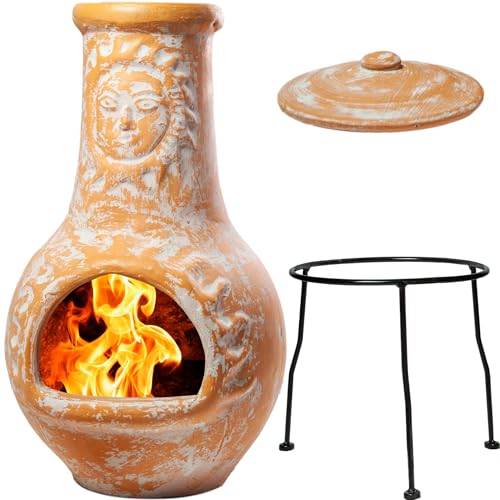 You can choose from a variety of options like steel and cast iron for durability and clay or terracotta for giving them a more traditional appearance. A fireplace made of clay or terracotta can crack at high temperatures. But, it’s the least expensive option. It also has a charming vintage look that can increase your property’s value. Cast iron is more durable and heavy than other metals, however it can be more expensive.
Some chimineas feature a metal finish with a natural patina of rust. This is a result that occurs when metal is exposed air and water. This finish is long-lasting and can last for an extended period of time. It is crucial to maintain your chiminea by cleaning it regularly with an abrasive and soapy water. Additionally, you should protect it from direct contact with water after heat to avoid corrosion and rust. Be cautious when moving your chiminea fireplaces, and make sure it is not placed on any surface that might be damaged by the intense heat.
Ventilation
The design of a chiminea has the chimney which directs smoke and soot from those that are gathered near the fireplace. This lets you make use of it even in smaller spaces. It also permits optimal air circulation which is ideal for outdoor cooking. This decreases the risk of fire destroying your patio furniture and garden.
Chimineas are made of clay, terracotta or metals such as steel or cast iron. The former is less durable and is susceptible to cracking when exposed to high temperatures or rough handling, while the latter is more durable and is available in many attractive finishes that can add a rustic element to your patio.
Chimineas and fire pits are excellent sources of warmth and ambiance for your backyard and are both simple to maintain. As long as you follow the right precautions, your chiminea or fireplace will last for many years.
With their broad bases that taper into narrow chimneys, chimineas add a distinctive aesthetic addition to your garden or patio. They are a great choice for small outdoor areas where a fireplace may not be a good fit or may hinder access to other garden seating. Install a chiminea 10 feet or more from your house and in a location where the breeze can blow smoke away.
A chiminea can be used to burn various woods, including aromatic ones like cedar and hickory. It can also be positioned so that you can enjoy the fire from one side however, it is kept away from the view of neighbors.
While some may suggest that the popularity of fire pits has rendered the chiminea obsolete to take into account your personal preferences when choosing between the two. Each type of fire feature has distinct advantages. The bowl-shaped open design allows you to create bigger logs and emit warmth in a 360-degree circle. Chimineas, on the other hand, have a more enclosed bottom that directs heat downwards. Both are excellent options to add ambiance to your backyard. However the best option depends on what you intend to use it for.
Heat distribution
Chimineas are enclosed to optimize heat distribution. This helps conserve resources and reduce environmental impact, especially when compared to fire pits. Both types of fires produce smoke that is made up of particles of matter as well as other harmful chemicals that could reduce air quality and cause respiratory ailments. There are a variety of factors that affect the amount of smoke produced such as the type and moisture content of the wood, weather conditions, as well as the length of time the fire burns. To reduce the risk of this, use seasoned, dry wood and chimineas made of effective designs.
Chimineas, in contrast to fireplaces and fire pits have a chimney that directs smoke upwards. This keeps the flames away from people or other flammable items and reduces soot and smoke. They’re also ideal for outdoor seating where guests can sit near the fire. Furthermore their curved walls and open access make it easier to tend to the fire without disrupting conversation or causing smoke inhalation.
They are also more stable than firepits which are prone to moving with the wind. This puts them at a higher risk to safety because of their open flames, as well as the shifting smoke direction. They don’t produce as much heat as fire pits used for cooking, since they are only able to hold small briquettes or logs.
Both fire pits and chimineas require a preliminary setup before you can start using them. A chiminea requires more preparation, such as pebbles or sand on the base before being used. A fire pit does not require this kind of preparation. You only need to add fuel and then light the fire.
In addition to regular cleaning, both chimineas and Fire Pits Chimineas pits should be placed on a grate or bed of sand in order to prevent them from damaging your patio floor. Some chimineas weigh as much as 200 pounds and are difficult to move once they’ve been installed. Additionally, you’ll need to regularly paint your chimineas with high-temperature spray paint to inhibit corrosion and preserve the look of its original finish. A fire pit on the other hand can be moved with ease, making it more versatile for a range of areas.